 R-01 / REALISM
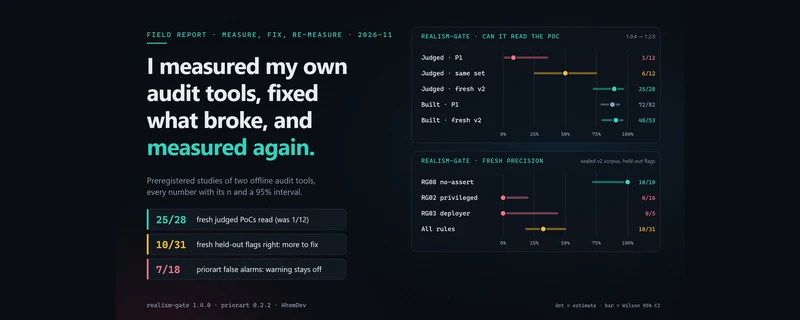
I measured my own audit tools against real exploit proofs, fixed what broke, and measured again
Themes: Realism and PoC · Duplicates
Research
Articles on bugs, proofs and why reports fail. Each one links to the public repository that proves its number.
Lead research · Nov 2026NewI measured my own audit tools against real exploit proofs, fixed what broke, and measured againPreregistered studies of my two audit tools on real exploit PoCs, sealed corpora and every number with n and a 95% interval. realism-gate went from reading 1 of 12 judged Solana PoCs to 25 of 28 on a fresh corpus; its fresh precision is 10/31, so 1.4.0 demotes the rules that were wrong. What broke, what I fixed, and what comes next.Articles, newest first
R-01 / REALISMThemes: Realism and PoC · Duplicates
 R-02 / AI
Themes: AI and tooling
 R-03 / PREHUNT
Themes: Pre-hunt gates
 R-04 / LOG
Themes: The rejection log
 R-05 / AI
Themes: AI and tooling
 R-06 / FINDING
Themes: Findings and builds
 R-07 / AI
Themes: AI and tooling
 R-08 / REALISM
Themes: Realism and PoC · AI and tooling
 R-09 / PREHUNT
Themes: Pre-hunt gates
 R-10 / FUZZ
Themes: Fuzzing and invariants
 R-11 / REALISM
Themes: Realism and PoC · AI and tooling · realism-gate
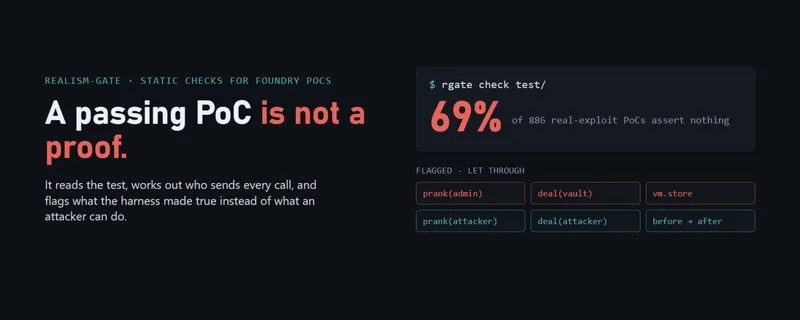 R-12 / REALISM
69% of 886 exploit PoCs assert nothing
Themes: Realism and PoC · realism-gate
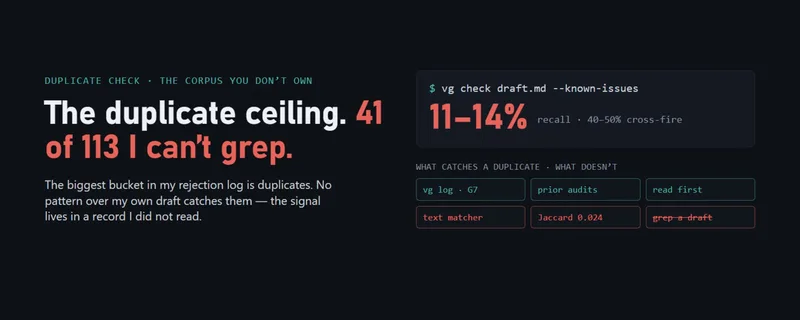 R-13 / DUP
41 of 113 died at the duplicate check: the one bucket no pattern can catch
Themes: Duplicates · rejection-taxonomy
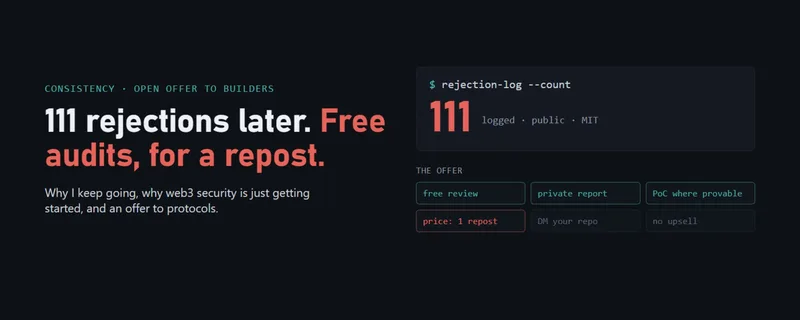 R-14 / LOG
113 rejections in the public log today (111 when I wrote this)
Themes: The rejection log · rejection-taxonomy
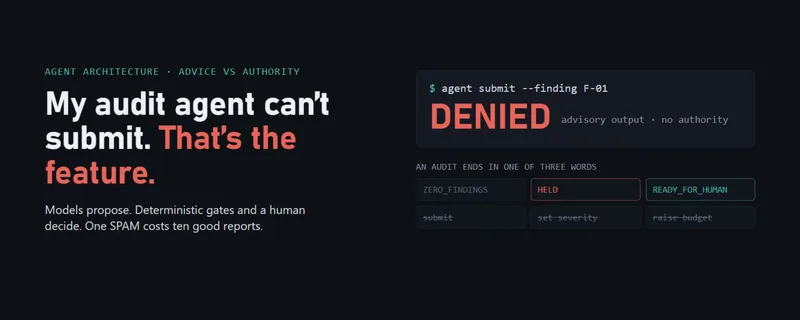 R-15 / AI
Themes: AI and tooling
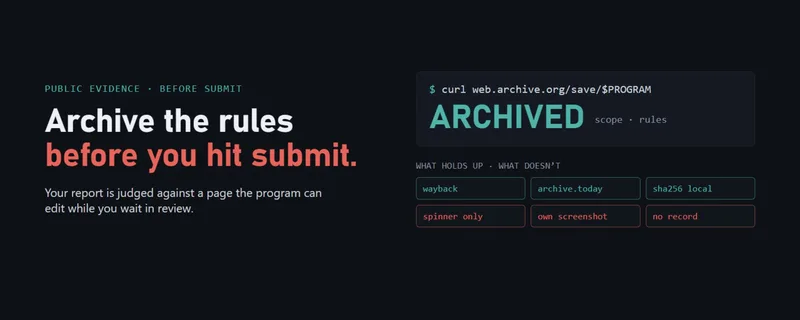 R-16 / PREHUNT
Themes: Pre-hunt gates
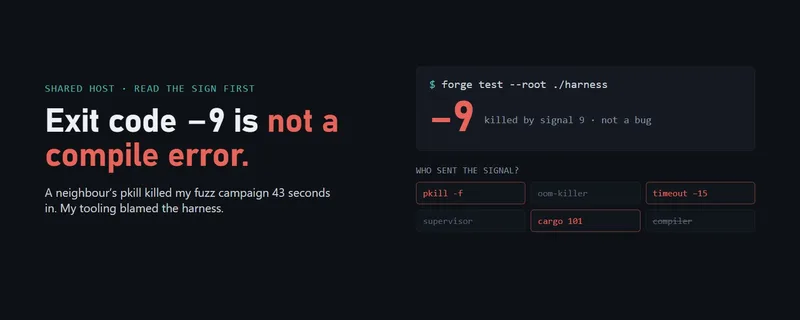 R-17 / AI
Themes: AI and tooling · Fuzzing and invariants
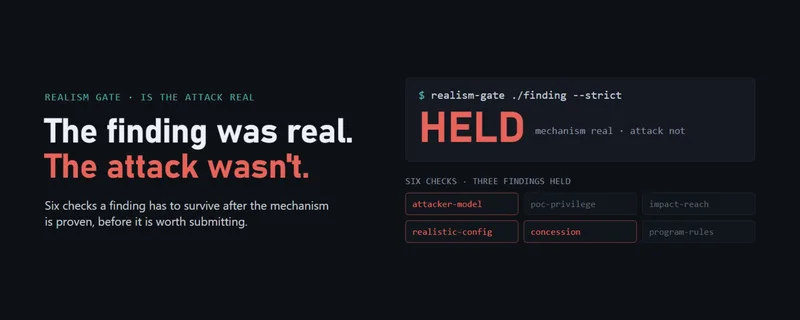 R-18 / REALISM
3 held at the realism gate: real mechanism, no real attack
Themes: Realism and PoC · rejection-taxonomy
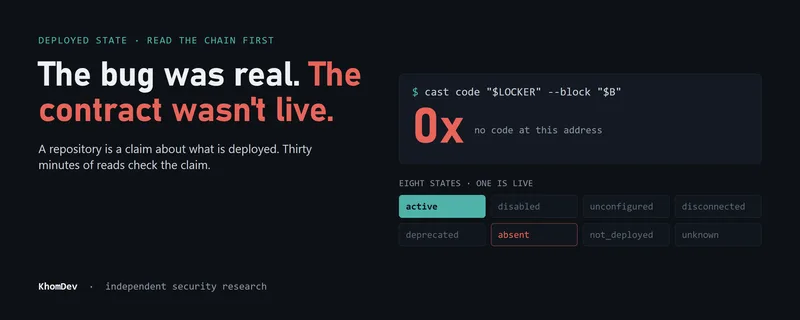 R-19 / PREHUNT
Themes: Pre-hunt gates · viability-gate
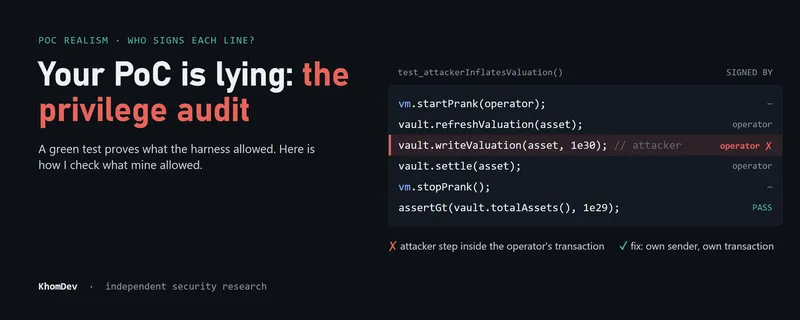 R-20 / REALISM
3 rejections whose earliest catchable gate is realism
Themes: Realism and PoC · rejection-taxonomy
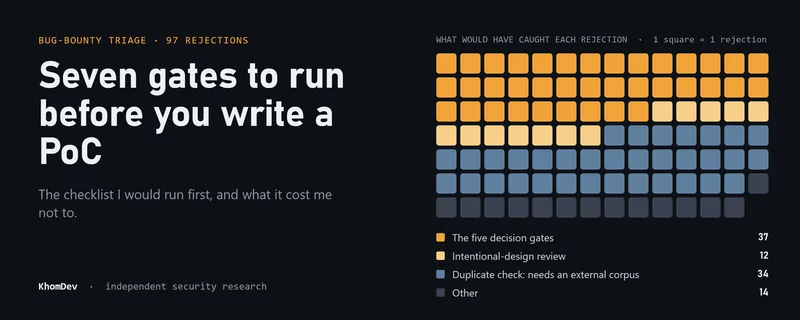 R-21 / PREHUNT
7 gates to run before the PoC
Themes: Pre-hunt gates · viability-gate
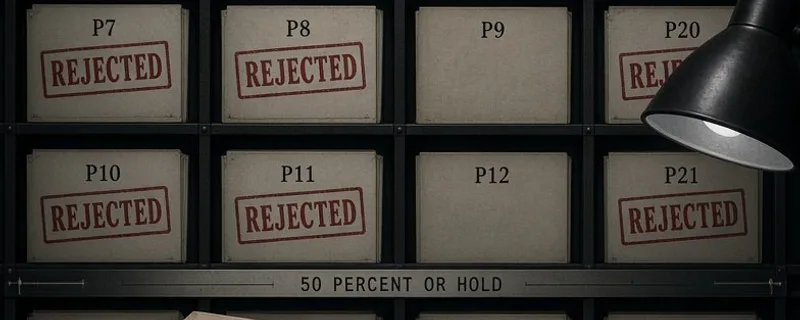 R-22 / PREHUNT
22 anti-patterns, each with a grep
Themes: Pre-hunt gates · viability-gate
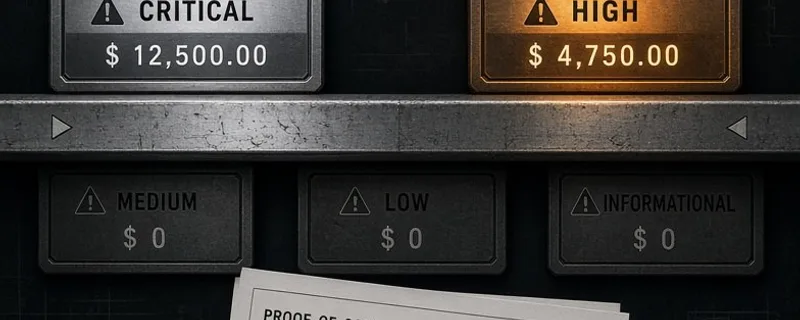 R-23 / PAYOUT
3 valid findings that paid $0
Themes: Payout economics · bounty-economics
 R-24 / LOG
55.8% preventable from the public record
Themes: The rejection log · Pre-hunt gates · rejection-taxonomy
 R-25 / BUILD
Themes: Findings and builds
The rejection dataset
55.8% could have been stopped from the public record. Each square is one report, coloured by the earliest check that would have caught it.
113 of 113 shown. Hover or tap a square for its gate. With a keyboard, focus the log and use the arrow keys; Enter filters to that gate.
55.8%
63 of 113 could have been stopped from the public record.
Mostly, the hard part wasn’t finding bugs. It was choosing which ones to chase. Most of these died on something already public once I had the finding: the program’s rules, its list of known issues, an old audit. 9 more I could have stopped only from my own log. So now I check those first, before I write the proof, and I turned the checks into free tools anyone can run.
The squares are grouped by the earliest gate that applied. The 78 in the first three groups are not the preventable share: they include duplicates with no public signal, one filed at the same time as mine, and withheld rows.
A known-issues list or public record already had it.
Exclusion clause, severity floor or scope tree.
An earlier audit or the test suite said it was known or intended.
Design intent, no attacker win, realism, or the payout floor.
The full dataset on GitHubThe write-up behind the datasetThe raw summary.json